
.png)
.png)
%20final%20final.png)

.png)
.png)
.png)
.png)


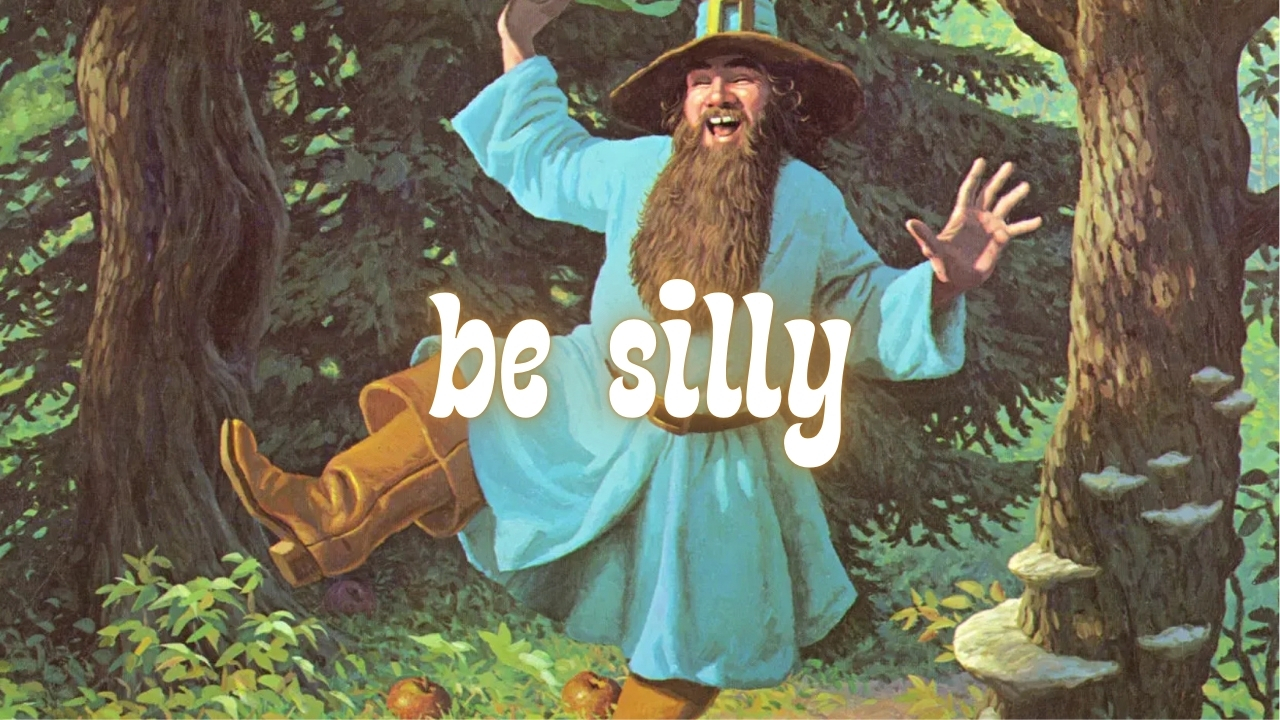
How to Dance Through Life Without Pretending to Be Normal

Ok, I know what you’re thinking, a philosophical video essay about the merits of showing your eccentric side. Isn’t that flying in the face of the exact definition of what it means to be eccentric? Well pretty much, but hey, it’s too late, I’ve already typed this essay up, even these words right now, and if you want to see me mentally contort my way through these contradictory hoops stick around.
Why you should reveal your peculiarities
If we are unafraid to look ridiculous in our day-to-day lives, we are demonstrating that we are open to owning up to our quirks. This honesty shows that you have a high degree of self-awareness as you recognise your flaws, but not too high where you are overly critical when you fall short of the mark.
By vocalising to the ones who are close to you what your quirks are, you are also warning them of the truth of your being: that more often than not you will get it right, but, from time to time, you will slip up and stick your foot in it. If you don’t do this, the next time you socially step on a land mine, you will want to crawl inside yourself instead of laughing at the situation you have created. Let me give an example of sticking your foot in it. Say you’ve just started at a new job and a colleague comes over to you and asks that you can call them by their nickname “Horsey” and you decide to take a punt and say “ah is that because of your face” and they look at you and go no it’s just my last name… Offering this overly specific example, you might not believe me but this was a story my mate told me.
Anyway, say you do find yourself in an embarrassing situation like this, it is not necessarily game over screen time, you can salvage it by laughing at your own buffoonery.
When you’re honest about your flaws, as long as it’s at the right time and place, (not at a funeral), it will likely be appreciated by others and allows for a mutual understanding to grow about the errs of being human. Being honest and open is a secure state of being, rather than blindsiding people with your peculiarities and being ashamed of yourself when they show up.
If you do this in a comedic way and are, as the writer Alain De Boutton puts it "dryly funny on the tragedy of being human", your “melancholy” will come from the heart and be perceived as an authentic and noble sadness where “suffering and disappointment are at the heart”. [1]
Admittedly, this does sound nihilistic but when we do laugh at our own tragedies, levity replaces seriousness which is not only beneficial for our own state of mind, other’s will appreciate it as well, as suffering is a universal experience. If you deny this universality, when you suffer heartbreak you will shut yourself off from others and feel as if you are alone in your struggle. This will cause you to put on a mask to try to hide your sadness and insecurity. However, despite your best efforts, people will see through this fragile exterior and you will also feel it breaking before your eyes. There is a Paul Simon lyric which hits home at this point: “Losing love is like a window in your heart, everybody sees you’re blown apart”. [2]
Don’t give the vindictive ammunition
If a spiteful person spots your weakness that you are too insecure to admit to yourself, they will devour you and make it their mission to reveal it in front of others.
The French philosopher Albert Camus illustrates this vulnerability with an analogy of a person going into a lion’s cage with a fresh wound. He writes: “If, before going into the cage, he has the misfortune to cut himself while shaving, what a feast for the animals!” [3]
As the lion is a predator, they will prey on weakness and so too, a person with predatory intentions will latch onto any weakness that you inadvertently reveal.
If you experience being publicly shamed for your weaknesses that you try to conceal, the consequences of this insecurity can be severe. One likely result will be that you will close yourself off from others, strengthening your victim complex as a result with you believing that no one understands you and that everyone is out to get you. In other words, you are innocent and everyone else is guilty. To Camus we are all capable of this self-obsessive compulsion. As he writes:
We are all exceptional cases. We all want to appeal against something! Each of us insists on being innocent at all costs, even if he has to accuse the whole human race and heaven itself. [4]
Once you reject this victimhood, this idea of being “innocent at all costs”, and accept that there is no hiding and that what you are feeling is universal, you can begin to let people in again. In doing so, you will understand why it is better for all involved to laugh at the absurdity of our predicament, in order to bring some much-needed levity to others who are using the same defence tactics you used.
A champion of this message was the late actor Christopher Reeves who, after living an exotic life of superstardom, suffered a near-fatal accident on a horse that left him paralyzed. Despite his misfortune, he learnt how laughing at his situation was the best therapy to get him through the day. His closest friend Robin Williams made him realise this; Robin’s silly nature helped Christopher snap out of his self-pity and laugh again.
The lesson I gleaned from Reeves’ story is:
Don't wallow in self-pity. Instead, discover the reason for your suffering, learn from it and laugh at it so your endurance can be an inspiration to others.
This is a different perspective than what Reeves used to have. Before his horrific accident, Reeves thought that a hero was someone who “commits a courageous action without considering the consequences”. However, after the accident, he realised that a hero is an "ordinary individual who finds the strength to persevere in spite of overwhelming obstacles". [5]
Humour is the key
If the secret ingredient to overcoming obstacles is humour, then tapping into our own ridiculous side can be a highly effective way to pull ourselves out of wallowing in self-pity.
There’s a stigma and a resistance to looking ridiculous as it suggests incompetence, especially in the professional world. Even back in the 19th century, this was in the zeitgeist with the Russian writer Fyodor Dostoyevsky writing in The Brothers Karamazov:
Here you are not ashamed to confess to something bad and even ridiculous. And who will admit so much in these days? No one. And people have even ceased to feel the impulse of self-criticism. [6]
Fast forward to today and self-criticism is still in short-supply. Just imagine how taken aback you’d be if you heard a politician own up to their shortcomings voluntarily!
If your funny side has dried up
A way in which we can retain our humour and self-criticism is by resisting taking credit when you are being showered with flattery. To quote Dostoyevsky again, “nothing [in this world is] easier than flattery”, and with its abundance comes a temptation to hoard it in order to boost yourself up to dizzying heights of self-adulation. [7]
Instead of getting drunk on these complements, the most admirable thing would be to pass the praise onto another person who helped you whilst simultaneously making light of the reality. This demonstrates that your humble, humorous side is still intact and hasn’t given way to serious feelings of self-grandeur.
As the French philosopher Michel de Montaigne reminds us, “if you sit on the highest throne in the world, you’re still sitting on your ass.” [8]
Now, this shouldn’t be taken to the extreme of self-flagellation where you are repeatedly talking down to yourself in front of others. The point is to lean into humour in the moments where self-praise seems most appealing i.e. when you are being credited for more than what is warranted.
Tapping into your playful side and being cheerful is the key to a happy life as it means you are always tickled by the absurdity of existence. This will prepare you for the unpredictable variables that life inevitably throws your way. To quote Michel de Montaigne again:
“The surest sign of wisdom is constant cheerfulness”. [9]
Thanks for reading,
Brandon
Sources:
[1] Alain De Boutton - School of Life, Introduction
[2] Paul Simon – Graceland
[3&4] Albert Camus – The Fall Pg 280-281
[5] Christopher Reeves - Super/Man Documentary
[6] Fyodor Dostoyevsky - Brothers Karamzov Pg 625
[7] Fyodor Dostoyevsky – Crime and Punishment
[8& 9] Michel de Montaigne - The Complete Works: Essays, Travel Journal, Letters VS 161C

mood follows action
I share ideas, tools and things I’m building to help you act with more confidence, clarity and self-trust for free here:
Happy to have you here!
try refreshing the page and trying again!
