
.png)
.png)
%20final%20final.png)


.png)
.png)
.png)
.png)


Why Is Office Life So Soul-Crushing?

Ahhh the office, where company values are used as decor. Where you look away from your screen and are visually assaulted by inspirational song lyrics on the wall, with hits like ‘don’t stop believing’ or ‘ain’t no mountain high enough’ as if reading that halfway through an existential crisis can put you back on track.
As we’re propelled into the life of an adult, we’re presented with a choice: assimilate into the professional world or work on your own terms. A few months ago I left my cushy office job in search of something more stimulating but, seeing my bank balance do a nose dive, I know which is the more financially secure option... Despite my bank balance looking like someone’s age and not a phone number, one priceless insight I came to after stepping away from the corporate world is what traits are promoted, and what traits place you at the bottom of the hierarchy of competence.
Now before I start, let me come clean I’m not coming to this knowledge from being at the top of the hierarchy but the opposite; I was the sucker at the bottom, (although at the time I was blissfully unaware). In my first year, I did almost everything you shouldn’t do as an office employee. Looking back I think I was just making up for being too sensible in school. If there was no work to do, I would kick back and distract others. Then the boss would walk in and the other people who also had nothing to do would quickly pretend to type and I would remain in my relaxed pose, like a runner who hasn’t heard the starting pistol. The boss would then look at me and sarcastically say, “busy day?”
To me, pretending to work felt silly. There’s a joke by the comedian Bill Hicks about this exchange with a boss that hits home. The boss goes, “Hey how come you’re not working? And I go, there’s nothing to do, and he says “well just pretend that you’re working” and I say “well why don’t you pretend I’m working”. Sound logic right there but what I now realise is my easy-going attitude was making me look lazy, extinguishing any hopes for being taken seriously for a promotion. Of course, this was fair, I was coasting to the next pay check as the work wasn’t stimulating and my relaxed demeanour confirmed this. If they’re paying you a full wage they want to see some sweat on the brow, some hardship that you overcame.
Speaking to people in the office who did climb the ladder successfully, I understood how appearances are everything and if you want to raise your employability score (your reputation) you’ve got to…
Dress the part
Before getting into this, let me come clean, I did have an unconventional office experience in the 1st year as it was a small company with no HR. This, combined with being in the sales room, it was like the wild west. On some days we’d attempt jiu-jitsu even sparring with the sales managers and would lose every time. Then, as the company got bigger, the corporate jargon crept in and the managers who used to say the most outrageous stuff, were in charge of leading company value seminars. I admit, I was bitter about this falsehood, but eventually I realised it’s just the nature of the beast, and if you want to climb the ladder, you have to part with your freedom to express yourself and cultivate a persona that is a balance of warmth, seriousness and the occasional company mantra thrown in for good measure.
Within the environment of the workplace, seriousness is viewed as being synonymous with competence
Just consider the employer’s point of view. If they are looking for a manager, they don’t want someone who is easy-going and playful as this will set a bad example that will trickle down to those beneath them on the hierarchy. A manager in training is encouraged to keep away from being too friendly with their juniors for this very reason as it blurs the lines between the two roles, that of a manager and of a friend, and it can lead to a slippery slope where the subordinate takes advantage of their boss’s light-heartedness, perceiving it as leniency.
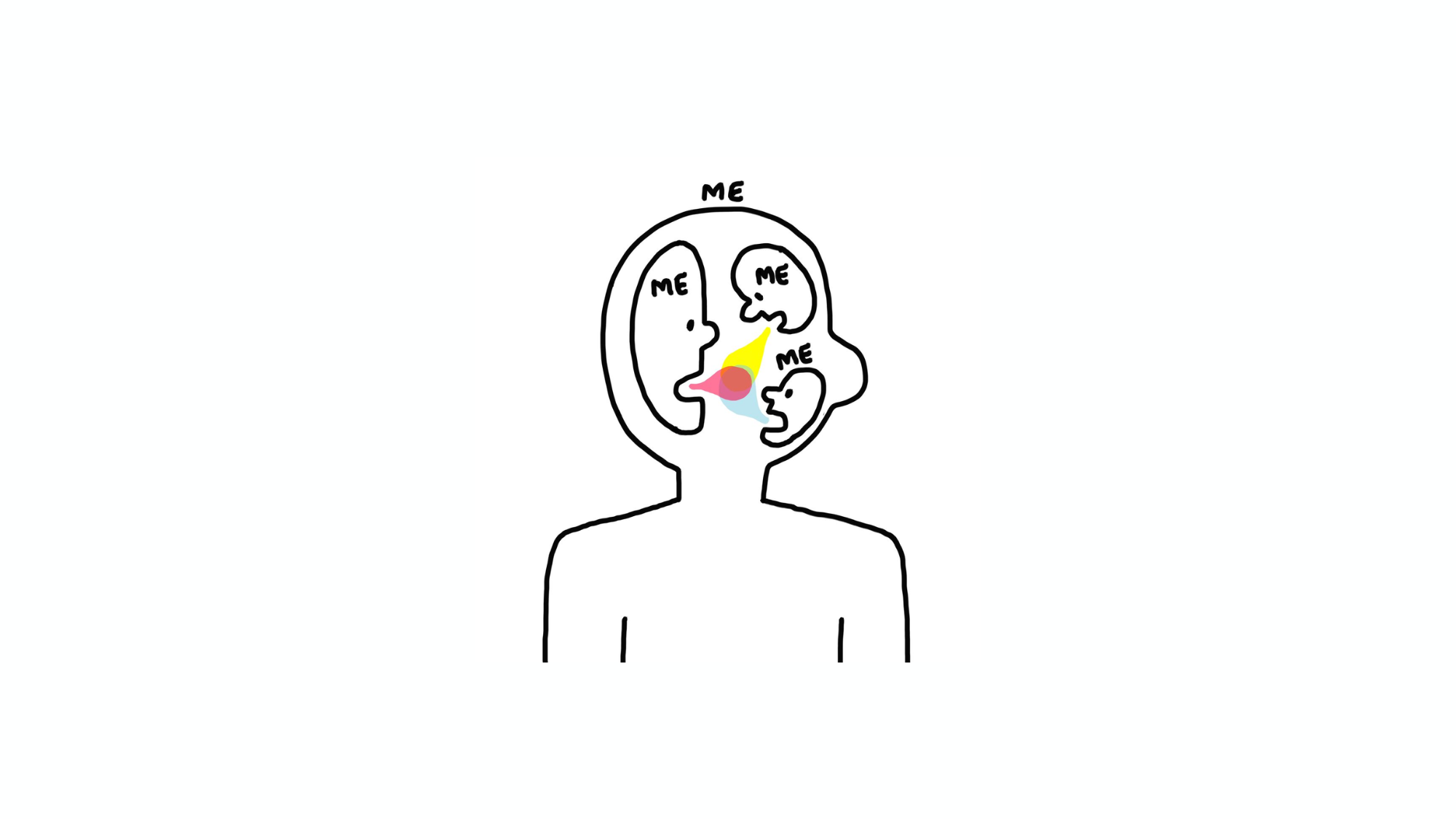
Being the over-sharer in the office is wrong and there is a strong case for the necessity of having a mask in the workplace
It is not always appropriate to showcase your raw, unfiltered personality, I.e. in the middle of a company update. If we look at previous generations, they understood this dual personality and embraced it. They wouldn’t have the blurred relationship of private and public life we have now where we willingly share sensitive information with colleagues.
This choice to over-share is a decision which may backfire in the future when we want to be taken seriously for a promotion.
In the past, picture the 50’s, the split would be less blurred; there would be two different people: one private and the other public, keeping the two sides separate and only showing their softer side to their close friends, partner and family. So, they’d leave their private personality at home and, every morning, change into a costume which is fit for the workplace.
Closing Thoughts
Now, I’m not saying let’s all go back to the Mad Men days where the husbands would lead double lives and cheat on their wives, that would be a repressive way to live.
However, when you work for someone, if your goal is to ascend the ladder, keeping your private life at a distance in favour of a more presentable and employable mask can make you a favourable candidate and blurs the lines less between your personal and professional life.
I’d also argue that living this way demonstrates an understanding that is in line with our fundamental nature. The workers of the 50’s for all their faults... Did realise that life is like a play, where we wear costumes in order to preserve our true personality for those we love. It is naïve and egotistical of us to assume that everyone needs to see the raw version of ourselves and, in our culture, where oversharing is rampant both online and offline, keeping things separate is a trait which is hard to come by. Besides, as we are the designers of the masks we choose to present to the world, they’re a representation of us, and can offer others a personal insight into how we think and who we want to be. In the same breath, how we present ourselves is our own creation, we’re responsible for them and we should keep in mind the potential repercussions regarding which traits we choose to present in the workplace.
Thanks for Reading!
Brandon


tHURSDAY'S THERAPY
Join 10,000+ improving their mental health & social skills 1 Thursday newsletter at a time
Happy to have you here!
try refreshing the page and trying again!
