


.png)
.png)
%20final%20final.png)


.png)
.png)
.png)


The Innocent in You | Carl Jung's Hero Journey (1/3)

In this series, we’ll look at the three stages of the hero. From the inexperienced innocent to the middle ground, the warrior, and then the fully realized king. We’ll explore fictional characters who embody each role.
This insight is based on the psychologist Carl Jung. But don’t worry, you don’t need to be familiar with him. As the hero goes on a journey spanning from one inexperienced point of view into a more refined and mature perspective, it’s universally applicable to our lives. And by the end of the series, you’re bound to find out which one you resonate with and whether it’s the productive or unproductive attributes.
In this first article, we’ll look at the first stage, the innocent.
The Innocent
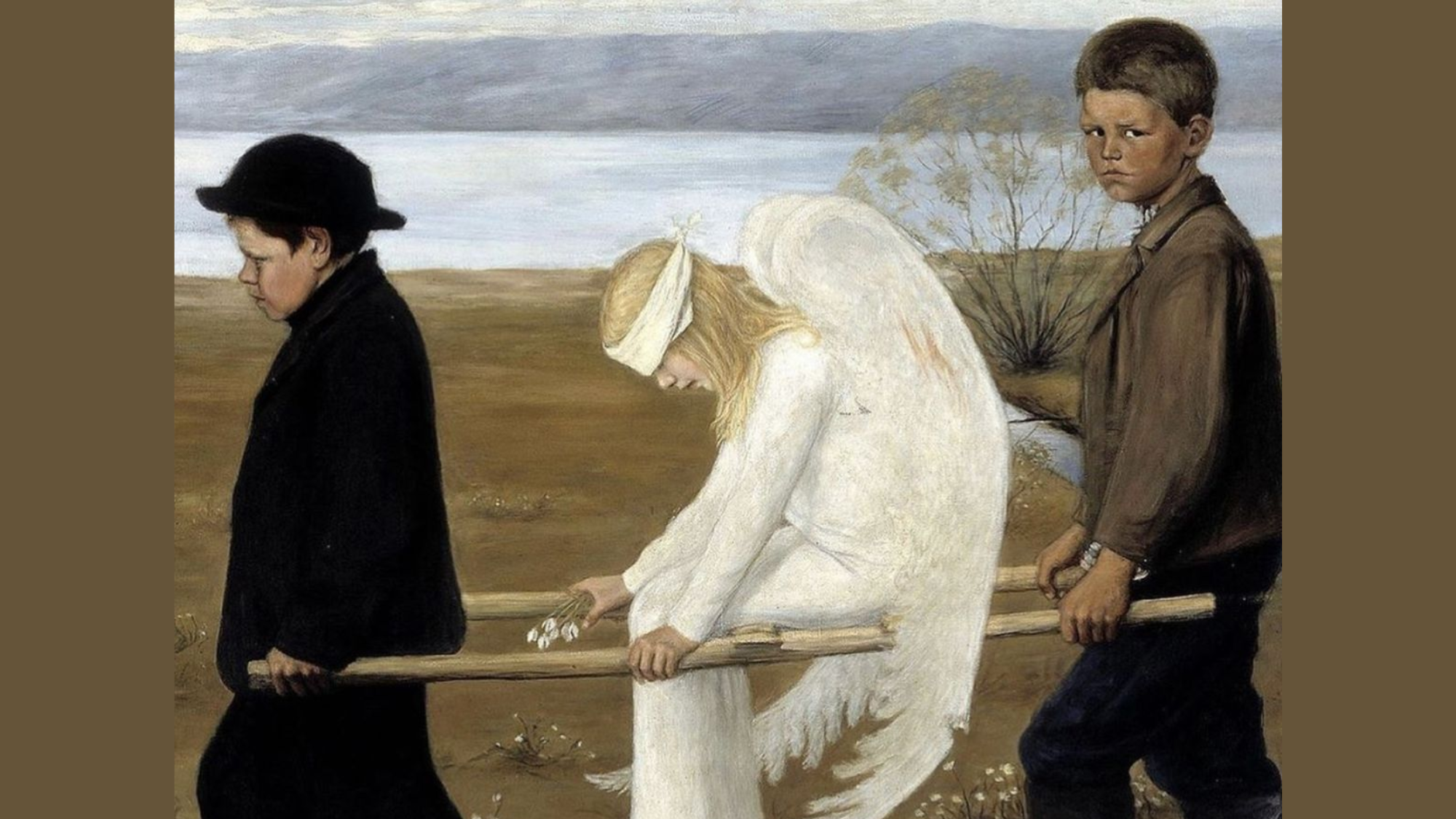
The innocent is the undeveloped hero. The hero at the early stages of their journey before their destiny has been revealed. In this stage, they are inexperienced, sheltered from the darker aspects of life, making them vulnerable and weak. They may have an overly trusting nature, overlooking some people’s ulterior motives and potentially being manipulated and moulded to another person’s will as a result.
They wear their heart on their sleeve, which is a deadly combination if paired with a lack of experience because it can make them more susceptible to being taken advantage of. In this sense, they’re like Alice from Alice in Wonderland, inexperienced and naïve, yet also simultaneously optimistic and spiritually pure, seeing the best in people no matter what. Whilst this does make you more gullible and susceptible to betrayal, this does also allow you to preserve a certain degree of childlike wonder and an untainted purity which others may have lost through their pessimism.
These traits can be seen in the character of Harry Potter, albeit with a more abusive tone when he’s locked in the cupboard of his aunt and uncle’s home. The psychologist Marie Louise von Franz offers an interesting interpretation of this commonality of the hero child’s origin, saying that like Jesus Christ being found in the stable, the new god of our time is always to be found in the ignored and deeply unconscious corner of the psyche.
If we combine this with the understanding that the self is the central regulating point of the psyche to which everything is related, we have enough evidence to view Harry’s room in the middle of the house under the stairs as a visual metaphor for this centrality.
Alice’s Journey
Returning to Alice in Alice in Wonderland, she begins her journey with a lack of experience. And this, coupled with her innate curiosity, makes for a dangerous combination, which Alice discovers down the topsy-turvy rabbit hole. It’s most apparent when Alice meets the twins, Tweedledum and Tweedledee, where the encounter begins with them asking her why she wants to find the rabbit, to which Alice responds that she’s just curious.
Hearing this, the twins tell a story involving a group of oysters whose curiosity leads them to becoming devoured by a greedy walrus. This story is told to teach Alice the dangers that her naïve curiosity can bring and must be balanced by an awareness which is only gained by exploring the depths of the unconscious. And her following adventures bring her this awareness.
The way in which Alice can move to the later stages of the hero is through life experience then with von Franz advising:
“Such naivety or childish innocence can only be cured of these illusions by passing through disappointment and bad experiences”.
So the most effective way one can expose their childishness is to suffer through something.
This is when your inner child will show its face. When you get worked up over something which can be figured out, you are mimicking how you were as a child. When the smallest mishap seems like a catastrophe. From this von Franz goes on to say:
“What is genuine in a person and what is naïve like a child in them is the source of suffering”.
This means to progress past the childishness of the innocent, you must do away with worrying and replace it with a certain level of meaning and responsibility.
The Shadow - Childishness
Childishness is the shadow side of the innocent. It manifests in individuals who are gripped by the empty promises of the eternal child, which is called the ‘Puer Aeternus’, the child who never wants to grow up.
Peter Pan is the perfect embodiment of this neurosis. His fear of growing old is a main theme in his story, and it’s personified by his enemy, Captain Hook. If Peter is the eternal child who refuses to leave his provisional fantasy and become an adult, Hook is the opposite. He’s an old man onto whom Peter projects all of his fears onto. And so Peter must confront his enemy Hook to overcome these fears of the eternal child.
The writer Anne Yeoman in her book Now or Neverland points to a specific moment when Peter overcomes this fear. In her words:
“Peter assumes some of Hook’s more obvious attributes in his clothing and the crooking of his hand in imitation of the old pirate Hook”.
Symbolically, this demonstrates that Peter is ready to assume an adult identity.
With this shadow side, we can see that there’s a duality to the innocent, and Jung also touches upon this. Jung claims that within the innocent, the all-embracing nature of psychic wholeness is expressed. To Jung, it contains pre-conscious essence, which is the unconscious state of earliest childhood. And his post-conscious essence, which relates to the anticipation of life after death.
In Peter Pan’s case, anticipating an afterlife sent him into a state of crisis. He’d rather never grow old in order to avoid facing this reality. Another literary example of this neurosis is The Little Prince, which is a semi-biographical story of the author Antoine de Saint-Exupéry. Both the author and the titular character were aviators, and from the little evidence of St. Exupéry’s life, it would appear that he was only content when he was away from his wife and able to fly.
This is in line with the childish eternal child:
“They never quite touch the earth, never quite commit themselves to any mundane situation, but just hover over the earth, touching it from time to time, alighting here and there”.
The Positive attributes
Moving back to the positives of the innocent, one of their best attributes is their willingness to be their unique self in front of others. Some people are too scared to expose their inner child to others voluntarily and instead seek protection in their persona. The inner child is a uniting symbol that brings together the separated or dissociated parts of the personality, which has to do with the quality of being naïve.
Getting back in touch with this symbol is what can develop and encourage an individual into becoming their own unique self. There’s a reason why there’s so many archetypal hero stories out there that place the divine child in the center. Just think about the Studio Ghibli animated films. It is their naivety which makes us gravitate towards them as it symbolizes the purity found in the self, a quality that’s innate in all of us.
If you resonate with the innocent and are naïve at heart, then this isn’t all bad. It indicates that your childlike spirit remains intact. In Dostoevsky’s words:
“You must love life more than the meaning of it”.
And it’s this preference to feeling over intense analysis which is the innocent’s greatest strength.
As the physicist Paracelsus says:
“One who lives within reason lives without the spirit”.
To close off this section, the innocent childlike spirit has the ability to either pull us back or propel us forward. The child is always behind and ahead of us.
“Behind us, it’s the infantile shadow which must be sacrificed. That which always pulls us backwards into being infantile, independent, lazy, playful, escaping problems and responsibility and life. On the other hand, if the child appears ahead of us, it means renewal, the possibility of eternal youth, of spontaneity, and of new possibilities”.
Thanks for reading, and I’ll see you next time where I’ll talk about the next stage of the hero, the warrior.
Brandon
other related newsletters
tHURSDAY'S THERAPY
Join 10,000+ improving their mental health & social skills 1 Thursday newsletter at a time
Happy to have you here!
try refreshing the page and trying again!
