
.png)


.png)

.png)
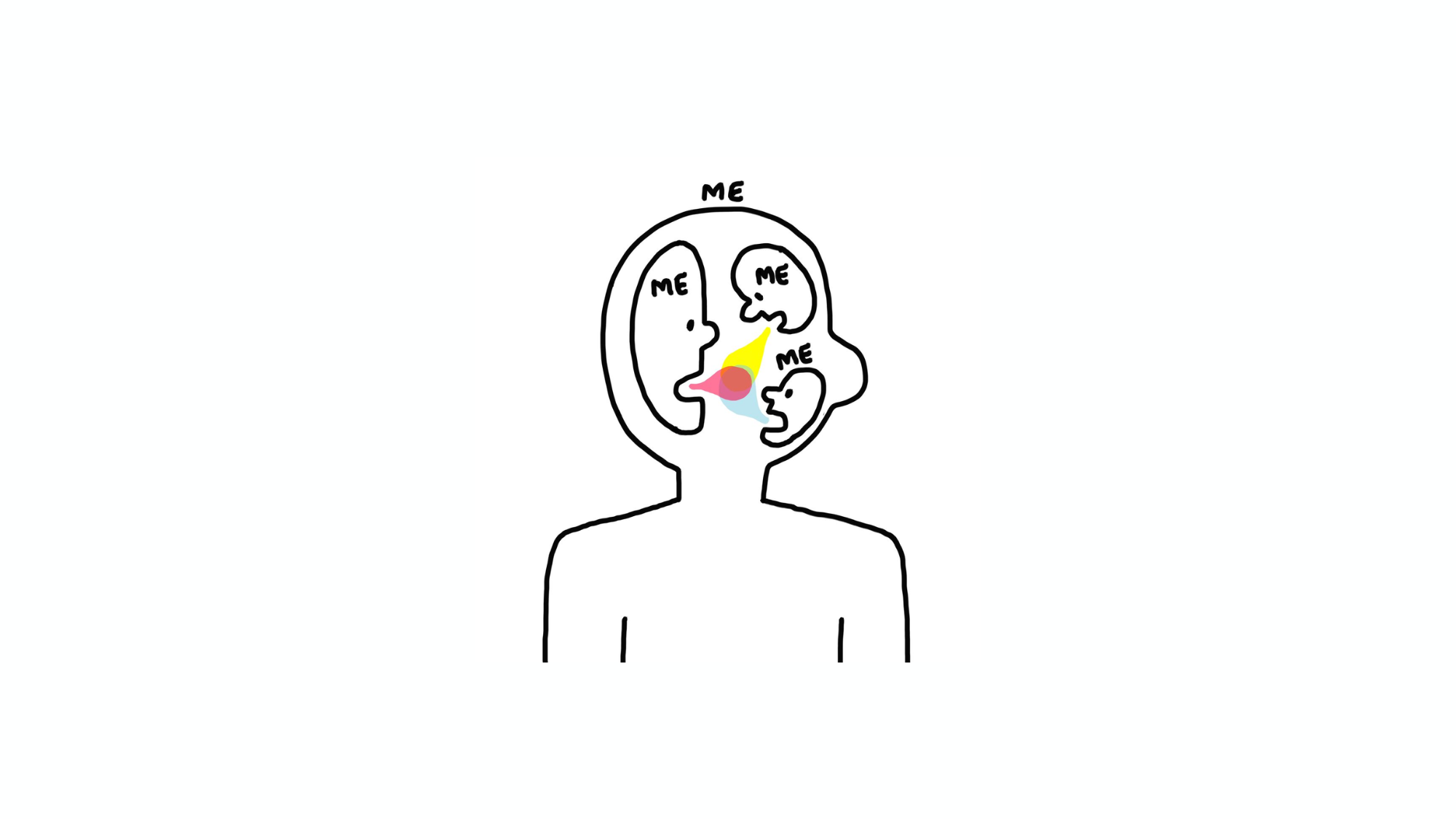




No one's ever taught you how to make your relationships awesome, so here goes…

Relationships crumble when needs aren’t met.
Not because you’re bad at love.
Not because the other person is a douchebag.
But because two humans didn't handle each other's needs properly.
Why this matters…
Without understanding how crucial needs are, you’ll:
Try to fix relationships with people who aren’t willing (or able) to meet your core needs.
Accidentally hurt others by ignoring or dismissing theirs.
Label someone as “wrong” when they’re simply wired differently.
Stay confused about why something that “should work” doesn’t feel right.
Zoom out from any relationship “drama” and you’ll see:
It’s just unmet needs showing up as spikey emotions.
For example…
Tom & Sarah are in a relationship.
Tom needs reassurance and closeness.
Sarah needs space and independence.
So Tom feels uneasy when Sarah goes out without him.
While Sarah feels controlled when Tom asks her detailed questions about where she’s going.
When they argue, they get caught up in the surface level; tone, sighs, hurtful words, heated emotions...
But underneath it all, it’s just two valid needs pulling in opposite directions.

You’ve probably felt this before; something small happens between you and someone you care about, and suddenly it turns into a much bigger argument than it should.
That's just a sign of misaligned or miscommunicated needs.
Analogy…
A relationship is like a bridge held up by needs - when those needs aren’t supported, the structure starts to crumble.
What to do next…
To make any relationship awesome, follow the mature relationship formula:
1.) Identify your needs.
Your needs are hiding in your negative emotions.
So if you're not sure what your needs are, ask:
What do I need right now to feel okay?
Example:
Feeling: anxious
Need: reassurance / certainty
Feeling: irritated
Need: respect / space
Feeling: disconnected
Need: attention / closeness
Note: if your answer sounds like controlling someone else’s behaviour, that's not a need, it's a strategy.
Example:
“I need you to text me more” → strategy ❌
“I need reassurance” → need ✅
"I need you to compliment my outfit" → strategy ❌
"I need appreciation" → need ✅
2.) Learn your partner’s needs.
Ask yourself:
What might they be needing right now?
Then ask them to confirm:
What do you need right now?
Steer them towards communicating a need instead of a strategy.
3.) Communicate yours clearly (say: “actually, here’s what I need…”)
Understand: they might not be willing or able to meet your need.
4.) Decide if you’re willing and able to meet theirs.
Ask: "do I have the sufficient time, energy, resources and willingness to meet this need?"
5.) If yes → commit fully.
6.) If no (you can't meet their needs or vice versa) → don’t resent them, just admit "I can't fulfil your needs right now" / "you can't fulfil my needs right now" or leave respectfully.
It's not otherworldly "chemistry" or fantastical mystery that makes a relationship awesome.
Just needs + willingness.
That's mature adult love.
Callout…
That’s the main thing I want you to take away from this, so if that makes sense, feel free to tap out now.
But if you want to go deeper, here’s what we’re going to cover in the next 3 minutes…
What needs are
What emotions really are and how they relate to needs
Where your needs come from
Go deeper...
1️⃣ What Needs Actually Are
Needs are not:
“Text me every hour.”
“Never talk to other people.”
“Always agree with me.”
Those are strategies, demands and control attempts.
Needs are the basic things humans require to feel safe, connected and respected.
Here's a list of the most basic universal human needs:

So when two people argue, they’re rarely arguing about the surface issue.
They’re arguing about:
Security vs Freedom
Respect vs Autonomy
Closeness vs Space
Certainty vs Novelty
That’s why most conflict never gets solved, because people stay on the surface - throwing strategies at each other - rather than addressing the core unmet needs underlying the conflict in the first place.
Now let's get clear on what emotions really are and how they relate to needs..
2️⃣ What Emotions Really Are
Emotions are signals telling you whether your needs are being met or threatened.
Analogy: think of them as dashboard lights on a car - letting you know when the oil level is low, if there’s an engine failure or whether the light bulbs need changing.
Whatever you feel intensely usually means something important to you feels unmet or unsafe.
Examples:
Jealousy → unmet need for security / reassurance
Anger → unmet need for respect / fairness
Loneliness → unmet need for connection
Resentment → unmet need for appreciation
Anxiety → unmet need for certainty / safety
So emotions aren’t “random”.
They’re feedback.
Now before we mention an important nuance, here's the rundown on where needs come from...
3️⃣ Where Needs Come From
There’s three things that make up your needs.
1.) Evolution
Some needs are hardwired because they increase survival.
Safety
Belonging
Status
Sexual connection
Autonomy
Fairness
Your brain evolved in small tribes where:
Belonging meant survival.
Exile meant death.
Losing a mate meant losing protection.
So the needs of connection, survival and sexual connection were enough to motivate your ancestors to prevent bad things from happening.
But if we all share the same core human needs, why do some people need things at different intensities than others?
2.) Childhood
Some needs become amplified based on early experiences.
If:
Love felt inconsistent → strong need for reassurance.
You were criticised → strong need for appreciation.
You had to be independent early → strong need for autonomy.
You were engulfed → strong need for space.
So while we all share the same core human needs, our different upbringings change the intensity level.
The final place our needs come from is...
3.) Identity
As you grow, you build identities - self-images.
“I’m someone who needs depth.”
“I’m someone who needs freedom.”
“I’m someone who needs to feel admired.”
So:
Some needs are biological.
Some are psychological.
Some are fear, ego, and growth oriented.
Some are identity-based narratives we’ve reinforced.
Sometimes what feels like a “need” is actually:
A preference
An insecurity
Or a status signal
Being able to tell the difference = relational maturity.
Key takeaway...
Mature adults question their own needs instead of blindly defending them.
Now we’ve covered all that, let’s wrap up with the nuance…
No one can meet all your needs, nor should they be expected to.
Some needs are yours to meet:
Self-regulation needs
Community needs
Purpose needs
And no one else can help you meet them.
Worse yet, if you outsource all regulation to one person, the relationship turns into a pressure cooker.
This shows up as one person expecting the other to:
Be their only emotional outlet
Be their sole source of validation
Fix their self-worth
The keytakeaway…
Your partner is responsible for caring about your needs - not carrying all of them.
The summary…
Stop asking; “are they the right person?”
Start asking: “are our needs compatible? And are we both willing to meet them?”
If the answer is yes on both sides - you don’t need magic.
You’ll have stability.
You’ll have safety.
You’ll have growth.
And that’s what an awesome relationship actually feels like.
Thanks for reading :)
Until next week,
Lew
P.s. I've been running an awesomely wholesome community for the last month helping people build social confidence through something I call social autonomy. I'm about to send an email to a special list with the main things I've realised since running the community. You can join the special list & get the email straight to your inbox here.
mood follows action
I share ideas, tools and things I’m building to help you act with more confidence, clarity and self-trust for free here:
Happy to have you here!
try refreshing the page and trying again!
