
.png)

.png)



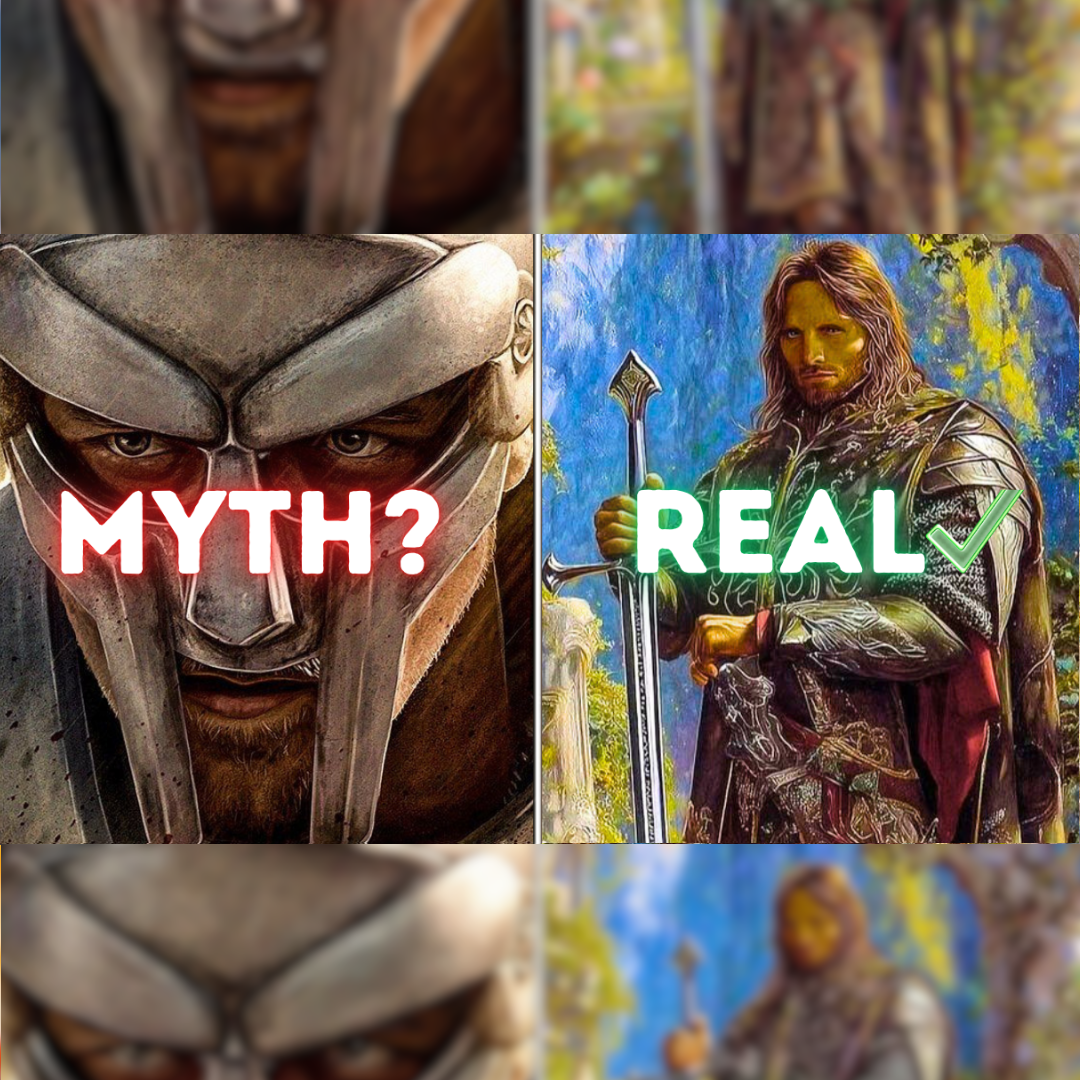
Warrior: Brutal Myth or Your Hidden Power?

Why is it that the warrior’s flaws aren’t talked about enough, and the real positives are ignored? Well, in this second stage of the hero’s journey—check out the first stage if you missed it—I’ll look at Carl Jung’s most misunderstood archetype, examining the positives, the shadow side, and what we often get wrong. As the hero goes on a journey spanning from one inexperienced point of view to a more refined and mature perspective, it’s universally applicable to our lives. You’re bound to discover which of these qualities you also hold, and whether they are productive or unproductive attributes. We’ll also look at fictional characters who embody the warrior’s qualities, considering from a psychological lens the choices that define them.
So, with that out of the way, let’s look at the warrior.
The Warrior
The warrior is the middle ground of the hero’s journey—when the hero accepts his destiny and follows his own path. Controlling emotions is what a warrior does best. Being able to restrain themselves if an enemy attacks them—this restraint gives them control of the situation. Without control, they’ll lash out and be spiteful. The warrior also needs patience. What the warrior understands about patience is that it means not being reactive, but instead allowing time to make the right decision. Without patience, you’ll make decisions out of anger. In the case of an enemy attacking, if they become angry, it means that the opponent already holds the emotional advantage.
As the writer Robert Greene says:
"The more attention you pay to an enemy, the stronger you make them. So, you must deny them the satisfaction of recognition".
Doing this shows that you understand the paradox of attention—that the more you chase after something, the more it slips past you. Restraining your emotions after being slighted is easier said than done, and it’s a huge challenge unless we have the warrior’s four other attributes: discipline, forbearance, timing, and will. Singling out forbearance, Carlos Castaneda defines it as:
“waiting patiently—no rush, no anxiety, a simple, joyful holding back of what is due.”
The true warrior doesn’t waste energy wishing things were another way. This allows him to conserve energy and give a proportionate response to the situation at hand.
But this can result in a lack of compassion.
The Shadow Side
The shadow side of the warrior is prone to blocking too many emotions. One emotion that cannot be contained is anger. If you put off dealing with emotions, you’re likely to cultivate this temperament and deliver outbursts of anger at people when your tolerance runs out. If you’re prone to this, remember what Marcus Aurelius once said:
“The best answer to anger is silence.”
The way the warrior escapes the shadow side is by having a less absolute view of emotions. Showing emotion is not always a form of weakness. You don’t want to be a cold, calculated robot unable to provide emotional support to others. This is when the warrior must be patient and receptive, and not feel as if listening to others is a waste of time. It’s this openness that keeps the anger and resentment of the shadow side at bay, helping maintain their positive qualities—keeping the shadow in front of them and the light at their back.
If you choose to ignore your emotional responsibilities, you’ll also feel compelled to reject any assistance from others, as to you, this will signify weakness. This is the trap of the warrior—that other people’s emotions are seen as baggage, hindrances to your goals. Through this framing, you feel you should struggle alone instead of asking for help.
The Warrior's Defining Moment
The defining moment when a hero becomes a warrior is when they stop running away and accept their destiny. This “running away” trope appears in Simba’s initiation in The Lion King. When Simba begins to doubt himself after blaming his father’s death on his own actions, instead of working through his shame, he chooses to run—from his responsibilities and from his destiny as king—opting to live in eternal relaxation with his friends Timon and Pumba.
Then Rafiki, a mandrill, finds Simba alone, lost and confused about who he is and his purpose. Simba is sceptical of Rafiki until he reveals that he knows of his late father, Mufasa. With his curiosity sparked, Simba follows Rafiki and finds himself at a pool of water—a symbol of the depths of the unconscious—which Rafiki instructs him to look into. At first, Simba just sees himself. But after looking harder, his reflection takes the face of his deceased father, who subsequently transforms into a cosmic entity in the clouds.
This is all Simba needs to believe in the potential of the man he can be, proving that it’s possible to live up to his father’s expectations and legacy. The lesson is that it’s never better to run away from your problems, as you may end up coming face to face with them when you’re not living up to your potential. When he accepts his destiny, the true test begins—he must now confront the dark shadow of the warrior to prove himself.
The Shadow’s Likeness
A common trope of the hero’s enemy is that they are a shadow version of themselves, bearing similarities to their darker attributes, but differing in the choices they make. This likeness is difficult for the hero to accept, but eventually, they realize that—like their enemy—they must embrace chaos to bring about a new world order, one more virtuous than the last. The warrior’s chaos mindset allows them to create a new and improved world from the rubble. As the German writer Johann Wolfgang von Goethe put it:
“We must always change, renew, rejuvenate ourselves—otherwise we harden.”
To achieve this warrior status in our own lives, we must be energetic, decisive, calm under pressure, courageous, enduring, persevering, patient, and loyal to a greater good.
Loyalty & Bravery in the Face of Death
Being loyal to a cause greater than oneself is arguably the strongest link between the warrior and the fully established hero, as there’s no greater sacrifice than to willingly die in service of a higher power. This dutiful sacrifice brings everything into perspective. As Carlos Castaneda said:
“Death is the only adviser that we have—it will tell you that you’re wrong.”
This sentiment is also shared by Jung, who observed that in our cluttered lives, we need the coldness of death to see clearly. As Jung put it:
“Joy at the smallest things comes to you only when you’ve accepted death.”
The warrior walks side by side with death as his eternal companion, leading him to an outpouring of life force that makes him more capable than the average person. By regularly and voluntarily exposing themselves to dangerous situations and surviving them, they become stronger than before, refusing to let fear of danger or uncertainty hold them back. They use their fears to push themselves onward. It’s this distinction that sets them apart from the naïve hero who pretends that fear doesn’t exist or doesn’t affect them.
You can see this naïveté displayed in Star Wars when Luke naïvely says “I’m not afraid.” and Yoda chuckles and says “You will be.”
Thanks for reading, and I’ll see you next time, when we’ll discuss the fully realized form of the hero—the King.
Brandon
tHURSDAY'S THERAPY
Join 10,000+ improving their mental health & social skills 1 Thursday newsletter at a time
Happy to have you here!
try refreshing the page and trying again!
