
.png)


.png)
.png)



Why your willpower disappears + what to do when it does

What feels like running out of willpower is often your brain just switching modes.
Why this matters…
If you don't adjust with that shift, everything starts to feel like you’re pushing uphill.
You’ll start telling yourself:
- “Why can’t I just focus?”
- “What’s wrong with me?”
Or worse yet...
"I'm a failure because I don't have 100% self-control all the time."
🥴
Here’s what’s actually going on…
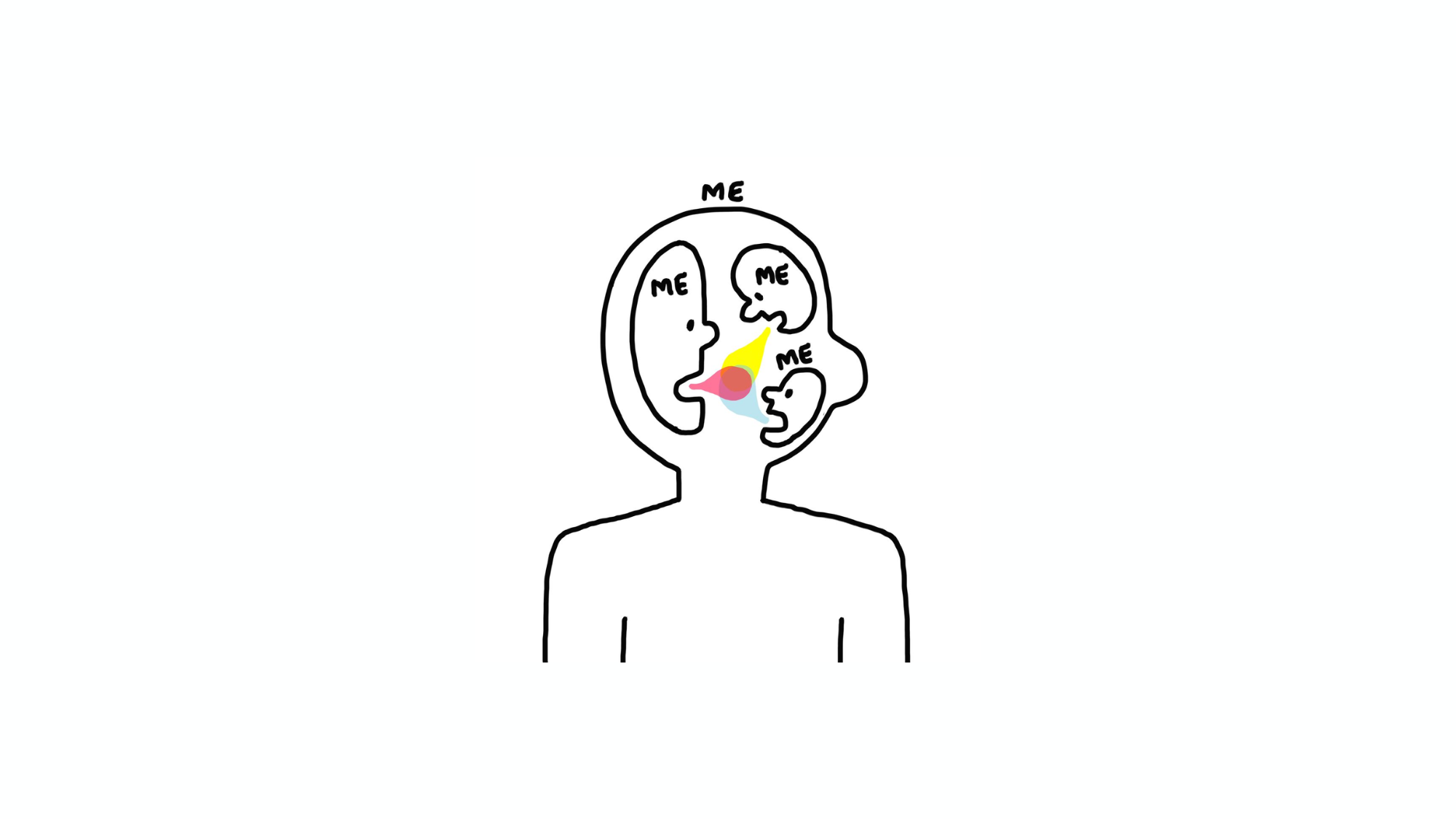
Your brain has two modes; tunnel and open mode.
In tunnel mode, it:
- Grabs one thing and shuts the rest of the world out
- Is more goal driven, resistant to distractions and able to power through difficult tasks
In open mode, it:
- Opens the door and lets new ideas wander in
- Sees links between new information
- Is more flexible
Tunnel mode is for finishing.
Open mode is for exploring.
Neither mode is ‘better’.
They’re just strategies your brain uses depending on what context it's in and what it’s trying to achieve.
This also explains why you give in to temptation.
It’s not always that your willpower ran out…
It’s that your brain shifted into open mode — and the door got left open.
What to do next…
The next time you're in tunnel mode but feel your willpower start weakening…
- Your attention slips and starts scanning for an exit
- Your body starts fatiguing with your workout
- You feel your mind tire the more you focus
… reframe the signal not as a sign you need to push harder but as a signal that your brain is changing mode.
Then instead of gripping tighter, take your foot off the gas for a moment:
- Step away from your desk when writing feels heavy and take a short walk
- When the push during a workout fades, don’t quit - change the intensity
- Instead of reading more, clean your room
Or: don’t abandon the task, just adjust how you’re doing it.
if you want to resist temptation, don’t rely on willpower alone.
Rely on being in the right mode when temptation shows up.
In tunnel mode, distractions get filtered out.
In open mode, they get explored.
(pause)
So protect your tunnel mode early:
- remove obvious triggers
- move rooms
- keep distractions out of reach
Because once you’ve shifted into open mode…
resisting gets a lot harder.
But now you might be thinking…
“Ok, so let’s say I’m sitting down trying to focus on something (tunnel mode) but I notice some resistance pulling me towards scrolling on my phone instead. Is that my brain wanting to shift gears or is it just a distraction?”
Answer…
There are two types of resistance.
- Doorway resistance
- Exit resistance
Doorway resistance is the urge for distraction you feel early on.
The reason why it's called “doorway resistance” is because if you surf the resistance for 5-10 minutes, it’ll disappear and you’ll get into or back into flow.
Rule 1: If it gets easier, stay.
Exit resistance is the unease you feel even after persisting - and this is your brain genuinely wanting to shift modes.
- Your focus is dropping despite effort
- You’re re-reading the same line
- Your energy feels flat, not sharp
- The urge isn’t “this is hard” it’s “this isn’t working anymore”
Rule 2: If it gets worse, switch.
Again:
- Step away from your desk, take a walk, call a friend, clean your room
- Let your brain shift into open mode.
A cool question to ask...
“Am I at the doorway… or am I actually done?”
Stay for 10 more minutes.
If resistance decreases: keep going.
If it gets worse: switch modes.
...
That’s the main takeaway I want you to have from this.
So if that all makes sense, feel free to bounce.
But if you’d like to go a few more minutes deeper, here’s what follows:
- The old idea of how willpower works
- The origins of the "tunnel vs open mode" idea
Go Deeper…
1.) The old idea of how willpower works
The idea that willpower is like some internal energy, worn out the more you use it, started in the mid to late 1990s.
Psychologists call it; ego depletion.
On the surface, it makes sense.
After a long day of resisting temptation you’re more likely to crash on the sofa and binge the night away watching netflix and eating ice cream.
Right?
But the more psychologists tried to pin down ego depletion, the more it slipped through their fingers.
It felt true, but it didn’t hold up once the studies started investigating it.
The bottom line…
The old idea that willpower works like a muscle is being questioned.
So if that idea doesn’t hold up, we need a new way of thinking about it…
2.) The origins of the tunnel vs open mode idea
This idea comes from the psychologist Bernhard Hommel.
He termed it; metacontrol theory.
Neither tunnel nor open mode is ‘better’.
They’re just modes your brain shifts into depending on the context, your goals and how you feel.
Tunnel mode:
- Pushing through a workout or final hour of studying
Open mode:
- Chatting with friends or going on a stroll around the block
Evolutionarily, being able to shift into different modes made sense for our ancestors because hyper-focusing on one thing until exhaustion would’ve been costly (a caveman needed to be aware of his surroundings in case... you know: 🐅).
Metacontrol theory also aligns with modern neurobiology; different dopamine patterns in your brain are linked to either focused or flexible thinking.
In summary…
You don’t have a willpower problem.
You have a mode mismatch.
So my challenge to you this week…
When you feel yourself slipping, ask:
- “Am I forcing tunnel mode… when my brain wants open mode?”
Then adjust the task - not your effort.
mood follows action
I share ideas, tools and things I’m building to help you act with more confidence, clarity and self-trust for free here:
Happy to have you here!
try refreshing the page and trying again!
